
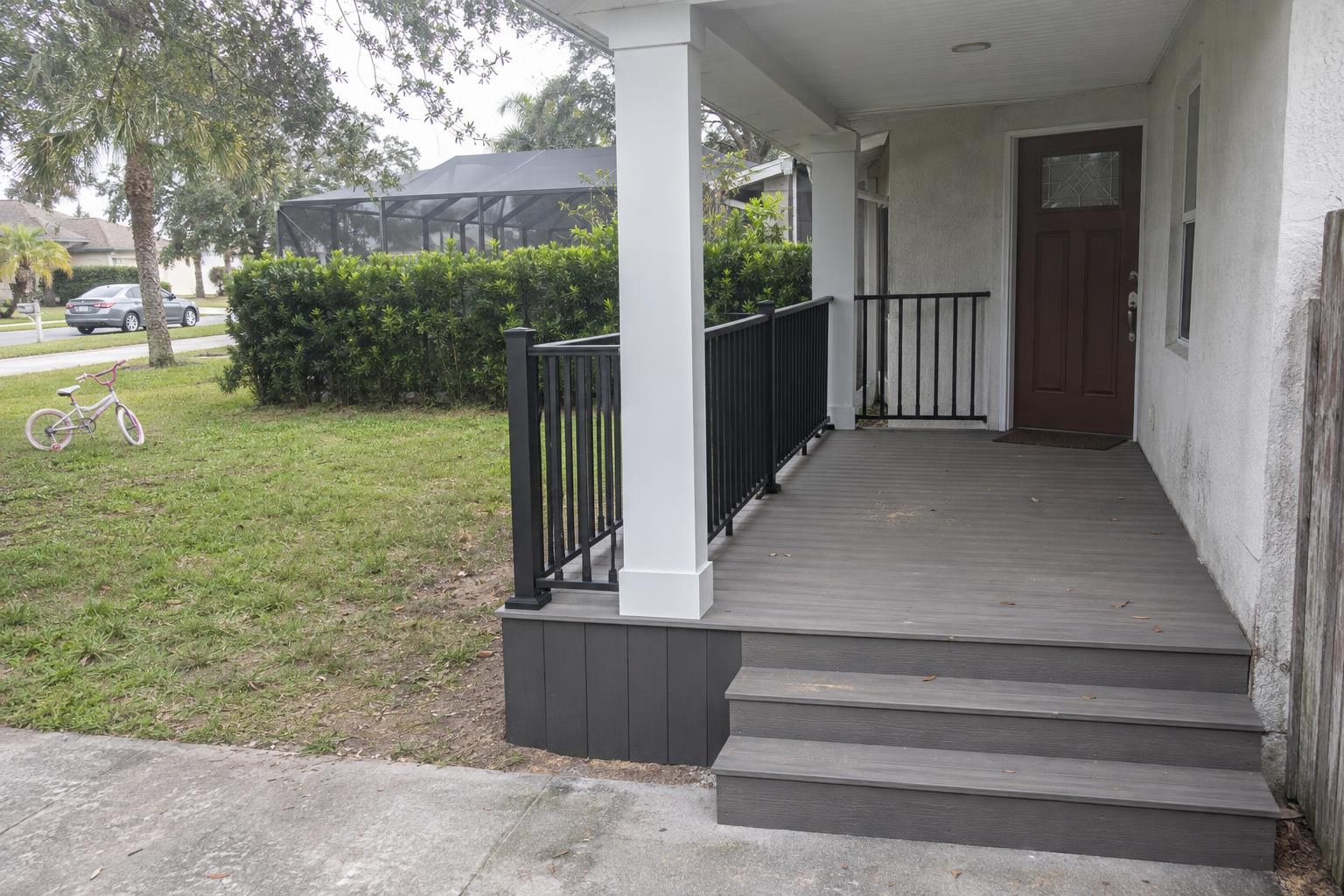
Dunedin sits on a sand base with a high water table close to the Intracoastal and St. Joseph Sound. That sand drains fast, which is good news for footings, but it also means posts and piers need to go deep enough to bear weight on stable soil rather than loose fill, especially on older lots near Edgewater Drive or San Christopher where the ground has been built up over the decades. Any builder worth hiring should be able to tell you, without hesitating, how deep they're setting footings and why.
Picking a deck builder here isn't that different from picking one anywhere else in Florida, but a few things matter more on the Gulf Coast than they do inland. Salt air corrodes fasteners faster. Humidity and afternoon thunderstorms from June through September mean wood moves and swells on a schedule most of the country doesn't deal with. And we're in a wind zone that the Florida Building Code takes seriously, which changes how a deck actually gets attached to your house.
Ask about the ledger board before anything else
The ledger is the board bolted to your house that the whole deck hangs off of. It's also the single most common failure point in deck construction nationwide, and Florida's humidity makes it worse here than most places. If that ledger isn't flashed correctly, water gets behind it, the rim joist behind your siding rots, and you don't find out until the deck starts to pull away from the house. A builder who knows what they're doing will talk about through-bolting the ledger rather than relying on lag screws alone, and they'll mention flashing, not just bolts. If someone glosses over this part or seems annoyed you asked, that's a reason to keep looking.
Fasteners matter too. Pressure-treated lumber today is treated with ACQ, a copper-based chemical that corrodes plain galvanized steel. Anyone building decks in Pinellas County should be using stainless steel or hot-dip galvanized hardware rated for ACQ contact, not the cheaper electro-galvanized stuff you'll find in a bargain fastener bin. Ask which one they use. If they don't know the difference, that tells you something.
Permits aren't optional, and a good builder treats them that way
Most deck work in Dunedin needs a permit through the city's building department, or through Pinellas County if you're just outside city limits. A raised deck, a screened porch, anything attached to the house structurally, all of that typically triggers an inspection at the footing stage, again at framing, and a final once it's done. If a contractor tells you permits are a waste of time or that they can "skip it since it's a small job," walk away. Unpermitted decking work can come back to bite you when you sell the house, and it can also mean the work was never checked against wind load requirements that exist here for a reason.
Setbacks matter too, particularly in older neighborhoods where lot lines are tighter and property surveys may be decades out of date. A builder who's done permit work in Dunedin before will usually ask for your survey early, not as an afterthought after the posts are already dug.
Wind load isn't a formality on the Gulf Coast
Pinellas County falls under Florida's high-velocity wind provisions, and a deck or screened porch attached to your house has to be engineered to handle it. That means proper joist hangers rather than toe-nailed framing, hurricane ties where required, and post-to-beam connections that are bolted, not just nailed. During hurricane season, June through November, a deck that was framed loosely is the kind of thing that ends up as debris in a storm. Ask whether the builder pulls engineered plans for larger structures like screened porches or pergolas, or whether they're working off a standard plan set the county has already approved. Either answer can be fine. No answer is not.
What the age of your house tells you about the job
A lot of Dunedin's housing stock went up between the 1950s and 1970s, concrete block construction on a slab, which means attaching a ledger means dealing with block, not wood framing like you'd find in a newer subdivision near Curlew Creek. Attaching to block takes different hardware entirely, sleeve anchors or epoxy-set bolts rather than lag screws into a rim joist. If your builder's answer to "how do you attach to block" is vague, that's worth pressing on.
Newer homes, especially anything built after 2000 in the areas developed more recently, usually have wood-framed exteriors that are more straightforward for ledger attachment, but may have HOA rules about deck materials, railing height, or even stain color. Dunedin itself doesn't have blanket HOA coverage citywide, but a fair number of the newer planned communities do, so it's worth checking your deed restrictions before you fall in love with a composite color that isn't allowed.
Wood versus composite, and what our climate does to each
Pressure-treated pine is cheaper upfront but needs to be sealed or stained roughly every 1 to 2 years here, because UV exposure and humidity break down a finish faster in Florida than in a drier climate. Skip that maintenance and you'll see graying, cupping, and eventually splitting within 4 to 6 years. Composite decking costs more initially, doesn't need staining, but still needs proper ventilation underneath, because trapped moisture against composite boards in our humidity can promote mold on the underside even if the top stays clean. A good builder will walk you through this trade-off honestly instead of just pushing whatever they happen to stock.
Red flags worth walking away from
- A quote with no mention of footing depth, fastener type, or permit responsibility.
- A contractor who wants full payment upfront before any material is delivered.
- No general liability insurance, or hesitation when you ask to see it.
- A verbal-only agreement with nothing in writing about scope, materials, or timeline.
- Pressure to skip the permit "to save time."
None of this requires you to become an expert in deck framing. It just means asking a few pointed questions before you sign anything, and noticing whether the answers are specific or vague. We've built and repaired decks across Dunedin and the surrounding towns long enough to know which shortcuts cause problems five years down the line. If you want a second opinion on a quote you've already got, or you're starting from scratch, Briarwood Construction Group is happy to walk the property with you and tell you straight what it'll actually take.